Gender Equality
Note to students: The best preparation for taking the reading quiz is to pay close attention to the key terms as you read. Each question in the question banks is directly linked to these key terms and phrases.
Chapter Focus Question:
What motivated gender equality and how did an opposition form against it?
- Workplaces and gender equality
- Definition of pink collar ghetto
- Status of Black women median wages
- Gains of gender vs racial equality
- College enrollment by gender
- College educated women and occupations
- Earnings and gender equality
Section Focus Question:
What strides did women make toward gender equality in the post-war years, and in what ways did women not make progress?
Key Terms:
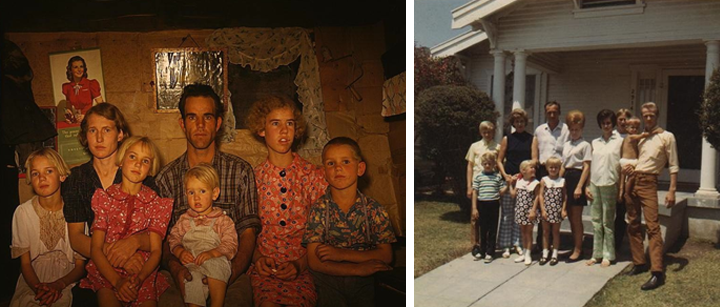
As with African Americans, women fought for their own victory on the home front of WWII. To achieve victory abroad in the war, they joined the WWII workplace, taking positions, especially in defense manufacturing that had been traditionally held by men. When the men returned, women refused to cede their place in working life.
In 1940, the civilian labor force included 13 million women, more than half of whom were single. Ten years later, the civilian labor force included 16.6 women, more than half of whom were married. By 1980 just over half of all women (45.5 million) were working and more than twice as many working women were married than single. Rosie the Riveter and her daughters, in other words, would not go home after the war, even after they got married.
As a result, an even more fully gender (as opposed to racial) integrated society emerged in America between World War II and the 1970s. Women, in general, and white women in particular, closed gender gaps in schooling and work at rates that outstripped those of African Americans as a whole.
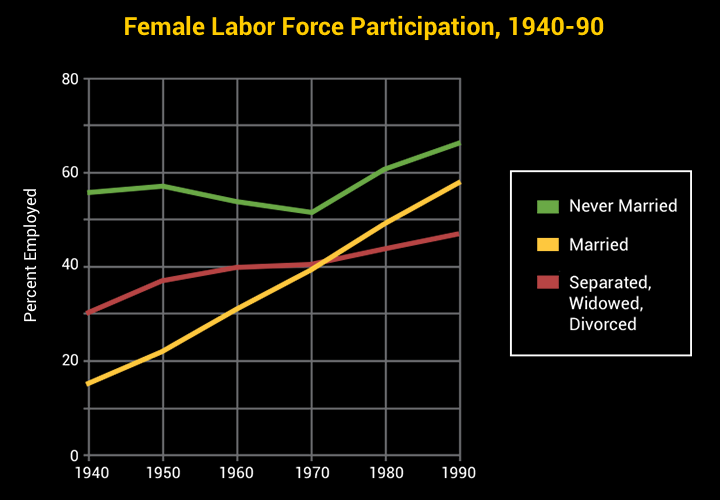
In 1950, more than two times as many men were enrolled in institutions of higher education than women (1,560,000 to 721,000, together totaling 14.3 percent of the 18- to 24-year-old population). By 1979, female enrollment in institutions of higher education exceeded that of men for the first time (6,223,000 to 5,874,000, together totaling 40.2 percent of the 18 to 24-year-old population). The gender gap favoring women only widened as the 20th century drew to a close.
This pattern was also reflected in graduation rates. In 1950, more than two times as many 23-year-old men held bachelor's degrees than 23-year-old women (278,240 to 104,306, totaling 16.1 percent of the 23-year-old population). Just over 30 years later, in 1981, women surpassed men on this metric.
Just as more education gave women more access to employment, so, too, did the changing nature of the job market. Some 40 million new jobs were created between 1950 and 1980. Of these, 30 million were in the service sector, which displaced the goods-producing/industrial sector as the site where more Americans worked. A significant proportion of the new service sector jobs went to women, making women, much more so than men, the beneficiaries of post-World War II prosperity.
Still, the extent to which women reaped the benefits of the growing and changing economy had its limits. More often than not, the increasing number of women who were well educated and who had entered the workforce with great expectations found themselves slotted into highly gendered stratified jobs. The lower wages and lower benefits of these jobs constituted what became known as a "pink-collar ghetto."

Though women would surpass men in higher education enrollment and degrees conferred by the late 1970s and early 1980s, men nevertheless comprised nearly two-and-a-half times the number of law school graduates, over three times the number of medical school graduates, and nearly seven times the number of dental school graduates in 1980. While 10.5 percent of men who earned doctorates in 1980 did so in engineering, just under one percent of women did. Conversely, in 1980, 33.2 percent of doctorates earned by women were in education, a field traditional to women, while only 17.9 percent of men's doctorates were in education.
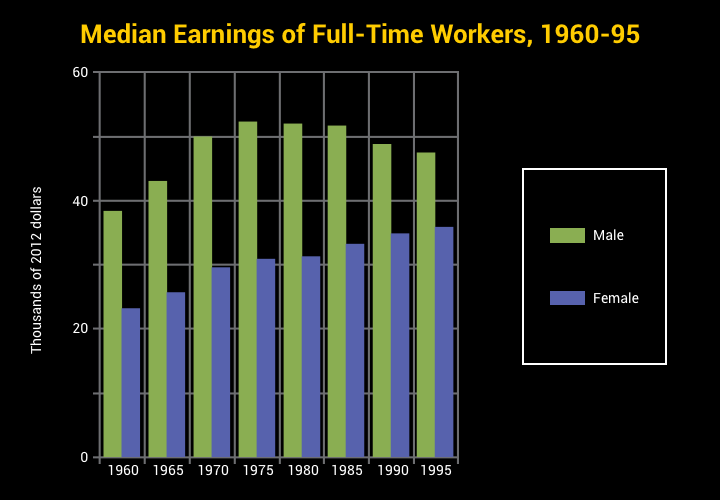
The persistent — if narrowing — gender stratification in education and employment during the post-World War II period helps explain the persistent — and not narrowing — gender stratification in income. In 1960, the median earnings for full-time working women was 49 percent less than men. In 1980, it was 49.7 percent.
During this same time period, racial gaps between the median earnings of black and white women narrowed to the point that black working women possessed nearly the same median earnings as white working women. At the same time, the racial gaps between black and white working men declined only slightly (from 36.6 percent in 1970 to 34 percent in 1980). Despite this difference, black men still had higher median earnings than white women by 16.2 percent in 1970 and 18.3 percent in 1980.
- Famous book about gender rights
- Postwar employment obstacles for women
- The Roe v. Wade Supreme Court decision
- Consequences of Title IX
- Critic of The Feminine Mystique
- Definition of "the feminine mystique"
Section Focus Question:
How did Betty Friedan and other activists for gender equality tackle the social and cultural barriers for women in post-war society?
Key Terms:
Besides being consigned to "feminine" jobs, women also encountered a popular culture in the mid-20th century that venerated traditional feminine roles. This gender conservatism arose despite (or perhaps because of) the rapidly increasing number of educated and working women. It also stood in uneasy tension with the enthusiastic racial liberalism of the late 50s and early 60s that propelled the civil rights movement forward.
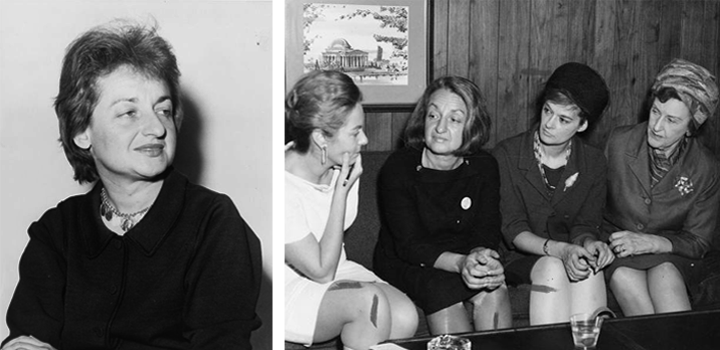
In response to the double-burden and double-standard women confronted, Betty Friedan published The Feminine Mystique in 1963. Friedan's manifesto indicted the drudgery of the suburban domestic sphere where the post-World War II cult of domesticity sought to slot women as happy housewives and doting mothers. It also called attention to the frustration and guilt many of those same women encountered as they sought work for wages outside the home and, in the process, ran afoul of the "feminine mystique." Friedan's book became a best-seller, as well as an opening salvo in the modern women's movement.
Thereafter, women continued to buck the "feminine mystique" when they prevailed upon Congress to pass Title IX of the Education Amendments of 1972. The law extended prohibitions against discrimination covering race in federally-assisted education programs to gender. Title IX would soon become synonymous with opening the floodgates to women in college athletics.
One year later, women extended to their very bodies the kind of control they had secured over their school and work lives. In 1973, the United States Supreme Court handed down its landmark Roe v. Wade ruling, striking down state laws prohibiting a woman from being able to choose to terminate a pregnancy.
- Failure of the Equal Rights Amendment
- Innercity flight to suburbs
- Definition of the "great divergence"
- Racial equality and decline of prosperity
- Phyllis Schafly and the Equal Rights Amendment
- Decision of Milliken v. Bradley
- Effect of hard economic times and the great divergence
- Timeframe of the Equal Rights Amendment
- Conservative reactions to the Equal Rights Amendment
- Continuation of the women's movement after the Equal Rights Amendment
- General public support to end legislation
Section Focus Question:
According to Mark Brilliant, what strategies did conservative activists use to appeal to American voters?
Key Terms:
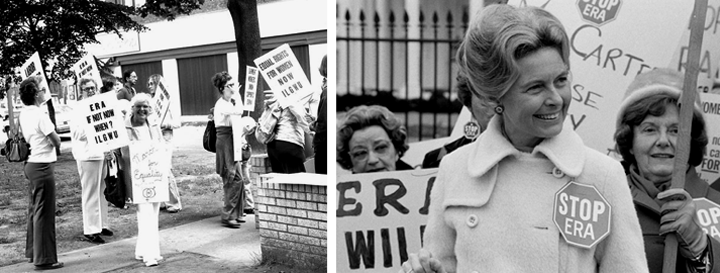
The women's movement provoked a backlash, which, in turn, would contribute to its most stinging defeat. In 1972, Congress approved the Equal Rights Amendment (ERA). Initially proposed in the 1920s in the wake of the 19th Amendment's granting women the right to vote, the ERA proclaimed, "Equality of rights under the law shall not be abridged by the United States or by any State on account of sex."
Opponents of the ERA, like conservative activist Phyllis Schlafly, insisted that the ERA would overturn longstanding legal protections women possessed as women. They also viewed the ERA as a threat to the traditional family structure that feminists like Betty Friedan had sought to challenge. Their efforts succeeded. In 1982, the ERA fell three states short of the 38 required for ratification.
Though failure to ratify the ERA represented a bitter loss for the march for gender equality, it did little to derail the long-term post-World War II trends involving women in education and on the job. The marches for racial and economic equality, however, faced more formidable roadblocks and encountered bigger setbacks.
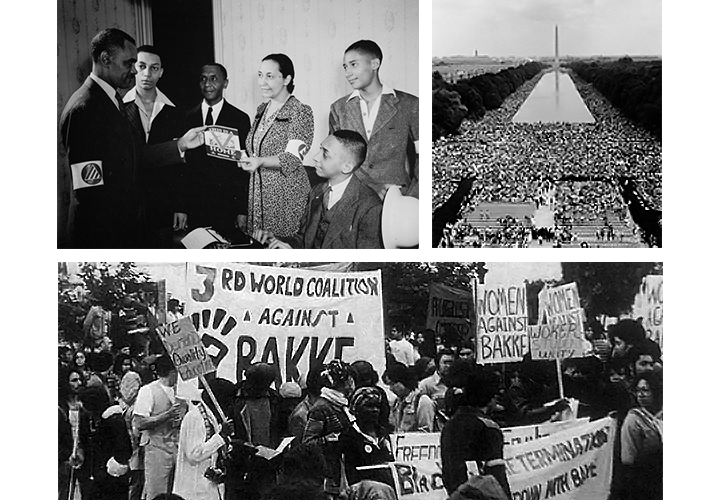
In the case of racial equality, the civil rights movement's progression from dismantling legalized segregation (or, Jim Crow) to legislating anti-discrimination (fair employment practices, fair housing) to establishing results-oriented proportional representation in affirmative action policies was accompanied by increasingly popular opposition.
It was one thing, for example, to remove statutory language from the law books. This, for example, happened in rather short order from 1945 to 1950 in California and was, according to Carey McWilliams, "accepted throughout the state with scarcely a murmur of audible protest." It was quite another to establish anti-discrimination laws, which encroached upon the decisions of private businesses and homeowners to hire or promote, or to sell or lease to, anyone on whatever terms they chose.
Similarly, it was one thing to strike down school segregation laws, as the Supreme Court did for the entire country in 1954, prompting massive resistance in the South. It was quite another to go from school desegregation in the law to integration in the classroom. When courts, including the Supreme Court in 1968, interpreted the principle of desegregation to require mandatory integration, the school busing required to achieve it quickly became what President Richard Nixon described in 1971 as "by far the hottest" domestic issue confronting the country.
Three years later, as the heat generated by busing only increased, the Supreme Court issued a ruling that sought to turn it down. Milliken v. Bradley held that busing across school district lines — in this case from schools in Detroit to schools in Detroit's suburbs — was impermissible, absent evidence that those suburbs were complicit in the school segregation in Detroit.
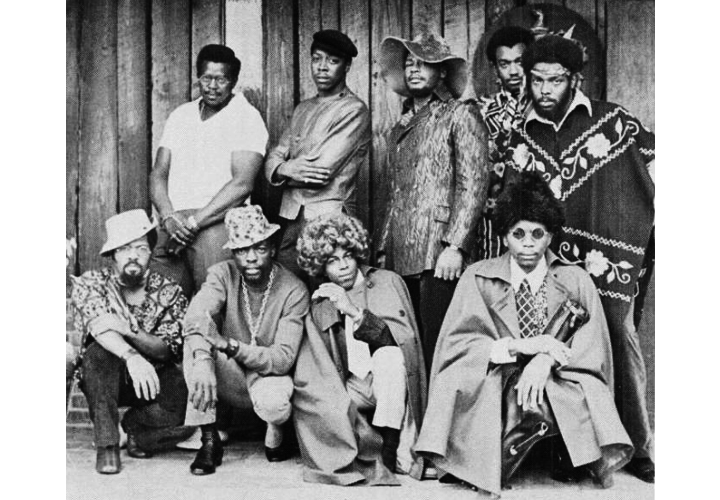
Twenty years after Brown v. Board of Education (1954), Milliken v. Bradley (1974) marked the Supreme Court's first retreat from the steps being taken to achieve integration. The nation was rapidly dividing itself into inner cities and suburbs, each of which had "economic and racial homogeneity" — a nation of "chocolate cities" surrounded by "vanilla suburbs," in the funk band Parliament's memorable formulation. Milliken foreshadowed a trend toward the de facto (in fact), if not de jure (in law) re-segregation of America's public schools that would begin in earnest in the 1980s.
Finally, it was one thing to pass fair employment practices laws that forbade racial discrimination in employment. It was quite another to suggest that there was racial discrimination because a race was underrepresented in a school or in employment. Insisting on affirmative action remedies became as controversial as busing.
From the Double Victory campaign through the civil rights era, proponents of racial justice sought to ensure that racial minorities had spaces aboard the boats being lifted by America's rising economic tide. However, no sooner had the civil rights movement secured its major congressional legislative victories in the mid-60s, particularly with the Civil Rights Act of 1964, than reduced growth and prosperity in the 70s began to undermine the achievements.
Harder economic times would have an even more devastating impact on the march for economic equality. Instead of being widely distributed, the benefits of the economy's productivity growth began to be narrowly concentrated. What would later become known as the "great divergence" in income equality took root. Beginning in the mid-1970s, the share of aggregate income for middle class to poor families declined, while the share of aggregate income for the top 20 percent rose; the top five percent prospered even more.
This marked a complete reversal of the pattern that had characterized the quarter century or so after World War II. America's overall economy continued to grow — albeit at a slower rate than the 25 years after WWII. But this rising tide no longer lifted all boats. Instead, it lifted only bigger boats, while leaving the smaller ones grounded, returning America back to levels of income inequality not seen since the decade before the Great Depression. The "greatest moment of collective inebriation in American history" was over.