Reconstruction
Note to students: The best preparation for taking the reading quiz is to pay close attention to the key terms as you read. Each question in the question banks is directly linked to these key terms and phrases.
Chapter Focus Question:
What were the goals of Reconstruction, and was it successful?
- Need for amendments to the Constitution
- Andrew Johnson
- Slavery and religion
- Jefferson Davis
- The 13th Amendment
- Black codes
- Freedmen's Bureau
- Robert E. Lee
- Presidential Reconstruction
Section Focus Question:
Who were the major players in the Reconstruction Era, and what were their positions?
Key Terms:
The most famous image of the end of the Civil War is Robert E. Lee's surrender to Grant at Appomattox Court House, Virginia. There, Lee promised that his army of about 28,000 would lay down its arms and go home; at a ceremony days later, Union forces saluted the defeated Southerners as they disbanded. Yet this image of a dignified and definitive end to the war is misleading. Violent conflict and constitutional crisis continued as Americans argued over fundamental questions about democracy, rights, and power. In the South, former slaves were for the first time part of that debate, as they struggled to establish new terms of labor and land ownership and fashion themselves as citizens of their communities and the nation.
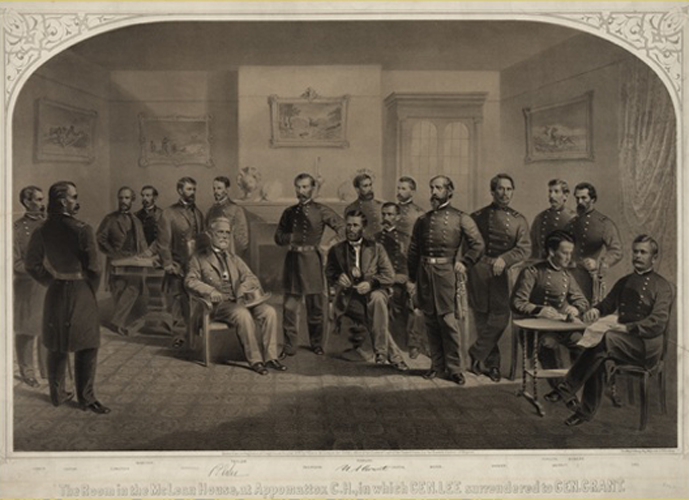
The war's final months were chaotic and ambiguous. Just six days after Lee's surrender at Appomattox, Confederate sympathizer John Wilkes Booth assassinated President Lincoln. Jefferson Davis, the president of the Confederacy, urged Confederate soldiers to fight on, and several generals held out well into May. The US Army began to demobilize its forces but kept about 200,000 soldiers in the former Confederate states to ensure that the rebellion was over. Amid that occupying force were some 83,000 African American men in uniform, concrete evidence of the radical turn the war had taken.
The US Constitution provided little guidance about how to reunite the nation. Politicians had begun feeling their way forward before the war officially ended. At the end of January 1865, Congress passed the 13th Amendment, which permanently abolished slavery throughout the United States. Congress also established a new federal agency to oversee the transition from slavery to a system of free labor in the South. The Bureau of Refugees, Freedmen, and Abandoned Lands (known as the Freedmen's Bureau) was housed in the war department, staffed by army officers, and headed by General Oliver O. Howard. In passing the 13th Amendment and establishing the Freedmen's Bureau, Congress signaled that the preeminent outcome of the war was the abolition of slavery. Yet many more questions remained to be answered.
Andrew Johnson, who became president when Lincoln was assassinated, had his own ideas about how national reunification should proceed. Johnson, a Unionist from Tennessee, had been a Democrat before the war but was vice-president during Lincoln's second term. Weeks after his own inauguration, Johnson issued proclamations that would guide how former Confederates were treated and how seceded states would rejoin the United States.
First, following a precedent set by Lincoln, Johnson announced that the government would "pardon" all but a few participants in the rebellion, provided they swore an oath of allegiance to the US government. Johnson excluded from the general pardon high-ranking Confederate officials and people who had left posts in the US government to join the Confederacy.
Departing from his predecessor, he also denied an automatic pardon to Confederates who had owned more than $20,000 in taxable property, a policy that reflected his antipathy toward the traditional planter elite. At the same time, however, Johnson indicated that members of the excluded groups could appeal directly to the US president for restoration of their rights.
Next, Johnson issued instructions to the former Confederate states on how to form new state governments and seek readmission to the United States. His policies favored white Unionists like himself, men who had opposed the Confederacy on grounds that secession had been designed to serve the interests of the planter elite.
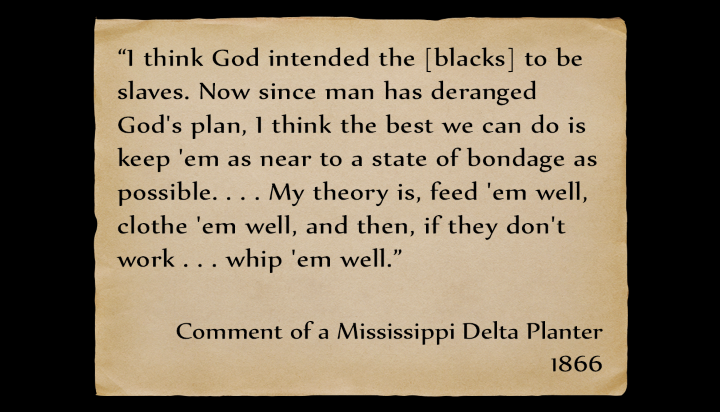
Yet Johnson cared little for the civil and political rights of newly freed slaves. He urged the new state governments created under his plan to ratify the 13th Amendment. But he also allowed them to pass laws designed to render freedpeople a subservient, captive labor force and forbid black men from voting or serving on juries. These "black codes" were efforts by the southern elite to restore control over a plantation labor force formerly held in place by whips, chains, and slave patrols
- Dollar of all slaves
- Special Field Order #15
- Freedmen's goals
Section Focus Question:
What were the “black codes” and what effect did they have on the development of Reconstruction legislation and the lives of freedpeople after the war?
Key Terms:
As southern landowners tried to regroup in the wake of the war, they faced terrible odds. More than 260,000 Confederate soldiers had died in the war, leaving behind large numbers of widows and orphaned children. Fields, roads, and livestock lay in ruins; the value of the South's slaves, roughly three billion dollars in 1860, had evaporated.
Even as southern political leaders worked to diminish the significance of abolition, however, former slaves insisted that they were entitled to freedom and a measure of dignity. Where local leaders would not listen, they approached agents of the US government — typically soldiers stationed in the South or Freedmen's Bureau agents. Yet federal policy was in flux.
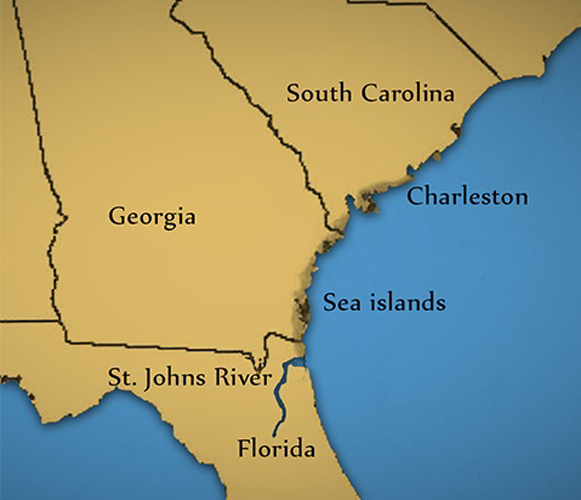
This situation became excruciatingly clear in South Carolina, Georgia, and Florida. In January General Sherman had met with a cadre of black leaders, most of the ministers, who indicated that what former slaves wanted most was plots of land where they could live with their families and farm for themselves. Sherman, looking for a way to settle the thousands of slaves who had begun to follow his forces, issued Special Field Order 15. It allowed freedpeople to settle on some 400,000 acres of land confiscated from Confederate sympathizers along the coast from Charleston to the St. Johns River in Florida.
The promise of independent farms for former slaves proved to be short-lived, however. President Johnson soon announced that the land in question must be returned to its former owners. Freedmen's Bureau agents protested, and freedpeople gathered in meetings and sent petitions to Washington.
They questioned how the government could reward ex-Confederates with land while depriving them — loyal Unionists — of a chance to make an independent living. They also pointed out that they had been forced to labor as slaves with no compensation. The least the government could do, they argued, was offer them a modicum or small amount of land in recognition of all that had already been stolen from them. President Johnson was unsympathetic, however, and the land was systematically restored to former owners who demanded it.
Freedpeople everywhere aspired to own land, but most also knew they would have to work for someone else in the short term. Some left the farms and plantations where they had been held as slaves, unwilling to labor for their former owners. Most freedpeople could neither read nor write. When possible, then, they demanded that Freedmen's Bureau agents oversee the labor contracts they made with employers, and they refused to sign their "mark" — usually an "X" — unless satisfied with the terms.
Former slaveowners, for their part, were entirely unaccustomed to treating their laborers as equal parties to an agreement. Freedpeople's proclivity to move from place to place unsettled them; they worried they would not have enough workers and that their farms would be unprofitable as a result. They found it difficult to believe that they could no longer whip their workers or force them to remain on their farms.
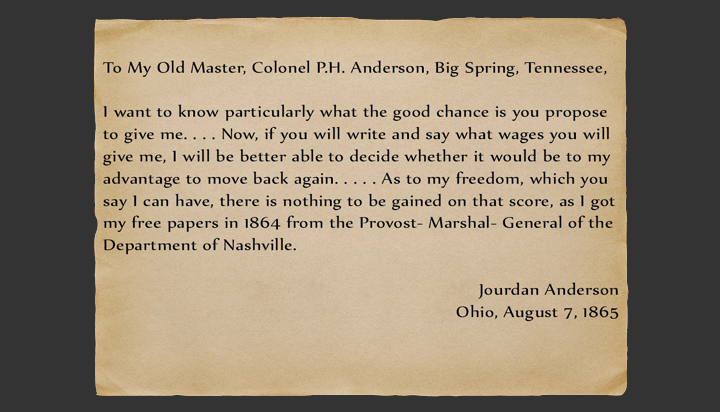
Tension saturated every aspect of relations between employers and formerly enslaved employees. In slavery, all members of a slave family had labored for the slave owner, their work lives directed not by their own preferences but by the demands of the owner. As freedom dawned, many former slaves put family reunification first. Some left home in search of family members who had been sold away years earlier. On farms and plantations, families sought to arrange their own labor as they chose. In many cases, families decided that women would devote themselves more fully to raising food for the family to eat and to caring for the children, while the men contracted to work with the landowner.
Across the South, former slave owners objected strenuously to what they viewed as the loss of part of their labor force. Similarly, freedpeople and former owners often sparred over the labor of children. Employers insisted that children must work for them and freedpeople argued for their right to determine how their own children would spend their time.
Meanwhile, in cities, towns, and rural hamlets, freedpeople gathered with free African Americans from both South and North to organize schools, churches, and political organizations. Under the regime of slavery, whites had outlawed black schools in many places, forbade slaves from learning to read and write, and restricted black religious gatherings.
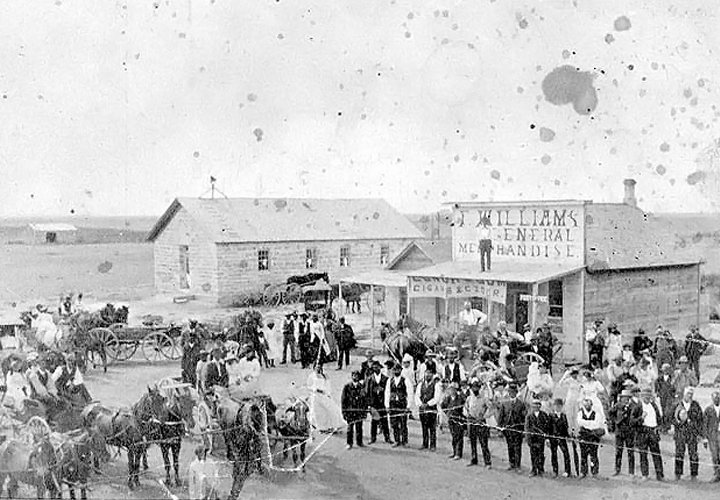
After emancipation, freedpeople pooled scarce resources to support independent schools and churches. They cultivated their own religious leaders, purchased land for church use, and forged black denominations, particularly among Baptists and Methodists. They poured great energy into supporting teachers and building schools, sometimes winning support from northern missionary associations and the Freedmen's Bureau. And they set their sights on politics. During 1865, African Americans convened state-wide meetings in both the South and the North and petitioned state governments and Washington for equal rights and full citizenship, including the right to vote.
Amid all this ferment in the South, a political crisis was developing in Washington. Congress reconvened in December 1865 amid reports that white Southerners remained defiant toward the US government. Republicans had embraced Andrew Johnson at first, but many were now concerned about his leniency toward former Confederates and about the failure of the new southern state governments to protect freedpeople's basic rights. Many Republicans were concerned that the United States' victory might be squandered, that without a more thoroughgoing reorganization of southern life, there would be nothing to prevent a new secession movement from developing.

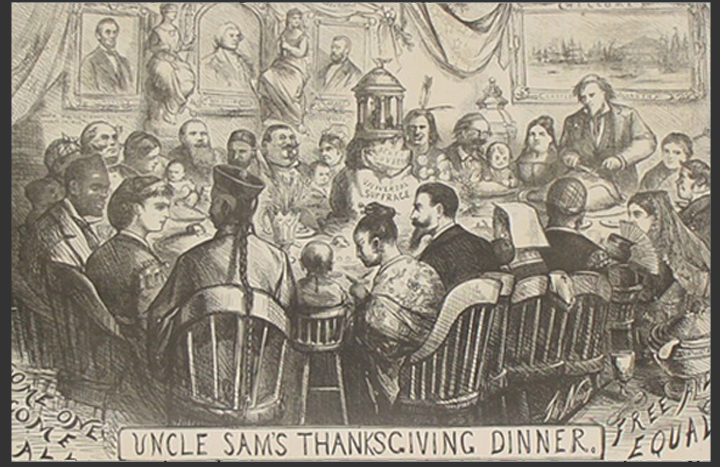
Congressional Republicans sought a middle ground, but the president dug in his heels. First, Congress passed measures designed to protect freedpeople's basic rights. Johnson vetoed these relatively moderate measures, signaling that he saw even moderate Republicans as political enemies and that he preferred to cast his lot with the Democrats. Congressional Republicans passed legislation over Johnson's veto and, in the spring, passed the 14th Amendment, which established that former slaves were citizens of the United States and insisted that states could not violate the basic rights of any person living within them. The amendment gave Congress the power to enforce the amendment, opening new possibilities for federal legislation to protect individual rights.
- Southern Republican states
- Union League
- Grasp of war clause
- The 15th Amendment
- Reconstruction Act of 1867
- Radical Republicans and the 15th Amendment
- The 14th Amendment
- Freedmen
- John Wilkes Booth
- Reconstruction Acts
Section Focus Question:
Why were the Reconstruction Acts of 1867 and the Fifteenth Amendment considered "radical"?
Key Terms:
But how could the federal government insist that southern states allow black men to vote? From the founding of the nation, state governments had been permitted to determine the qualifications of voters. Johnson's policy had recognized this tradition in allowing the states to continue to determine who would vote. Republicans in Congress discussed many ways of working within the Constitution to insist that black men must vote. They ultimately decided that because the former Confederate states remained in the "grasp of war," the US government retained more power than it had in peacetime.
In keeping with this theory, in a series of Reconstruction Acts in 1867, Congress divided the former Confederacy into five military districts and directed the army to oversee the registration of new voters and the creation of new state constitutions. Once a state had met a new set of qualifications — namely, permitting all male citizens of the state to vote and ratifying the 14th Amendment — it could rejoin the United States and be freed from special oversight by the federal government.
These new policies, often called Congressional Reconstruction or Radical Reconstruction, meshed with freedpeople's ongoing efforts to wrench themselves out of coercive relationships with their former owners and become full-fledged citizens. The spring and summer of 1867 witnessed perhaps the most dramatic political mobilization in American history. Across the South, on farms and plantations and in cities and towns, freedpeople gathered together to discuss how and for whom they would vote.
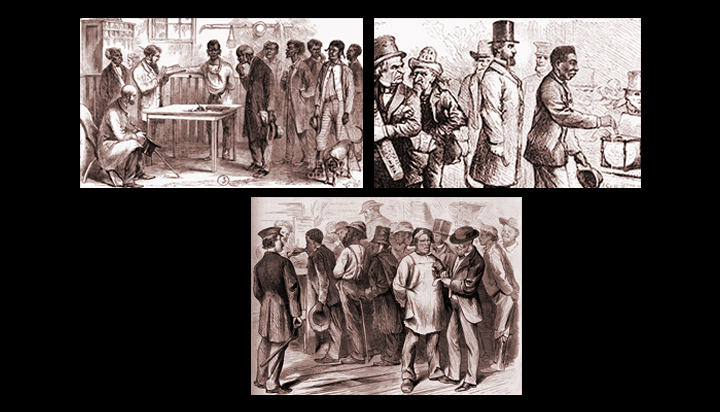
The Union League, an organization orchestrated by Republicans in the North, hired local leaders, many of them freed slaves, to travel through the rural South and mobilize people to vote. Freedpeople almost universally became Republicans, for the Republican Party was the party that had opposed the spread of slavery, the party of Abraham Lincoln, and the party that most supported their rights as citizens. The right to vote was a community-wide affair. Only men could actually cast ballots, but women and even children well understood the possibilities that were opening as southern African Americans for the first time joined the electorate.
In the absence of a prolonged military occupation of the defeated states, it was the southern Republican Party that stood the best chance of diminishing the power of the planter class. In fact, in southern states with large African American populations and, thus, where Republicans came to power, legislatures passed laws that protected debtors and taxed large property holders more aggressively than smallholders and laborers. And in a region largely bereft of public schools, these legislatures chartered and funded public schools for both black and white children. In some places, they even passed laws mandating racial integration in public accommodations such as streetcars, railroads, restaurants, and schools.
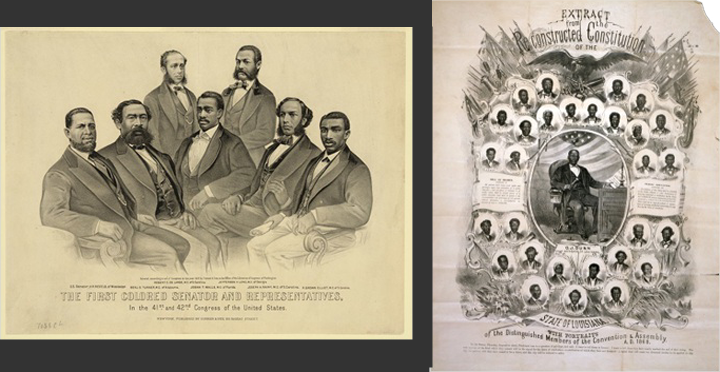
Southern Republican coalitions were fragile, however, and their fragility was heightened by the fact that many white Southerners believed that the Reconstruction Acts were unconstitutional and that African Americans must remain a subservient class, not endowed with the rights of citizens.
The Democrats rebuilt their party as growing numbers of former Confederates re-entered politics, either through presidential pardon or state mandate. White Unionists (called "scalawags"), initially an important part of the Republican coalition, gradually drifted toward the Democrats, choosing a race-based alliance with wealthy whites over a more class-driven connection with black voters. They were often nudged in this direction by violent secret societies such as the Ku Klux Klan, which conspired to intimidate and terrorize those who opposed the Democratic Party. The Republican Party thus remained strongest and most effective in states with the largest proportionate black population: Louisiana, Mississippi, Florida, and South Carolina.
Both in Congress and in the southern states, Republicans put enormous confidence in the idea that black men's enfranchisement would produce changes in southern society and protect African Americans' rights. Some radical Republicans further believed the only way to ensure a new political and economic order for the South was to redistribute southern land, taking it from wealthy landholders and giving it to former slaves. But most Republicans were not prepared to go that far. They believed land confiscation in peacetime was unconstitutional, and they thought it was enough to make African Americans full citizens, entitled to the same economic and political rights as whites. In the winter of 1869, Congress passed the 15th Amendment, prohibiting states from discriminating against voters on the basis of race, color, or former slave status, and giving Congress power of enforcement.
Since African Americans could already vote in the states under Reconstruction, the amendment's greatest immediate impact was in the North, where many states continued to forbid black men from voting. Yet the amendment was meant to guarantee that African Americans would continue to vote everywhere and thus have the same chance of protecting their interests at the ballot box as whites. In a nation founded on the principle of self-government, perhaps it stood to reason that the 15th Amendment was the culmination of federal Reconstruction policy. Its provisions, however, proved toothless in the face of white Southerners' violence and growing Republican indifference.